10 Ways ICE's aggressive anti-immigration enforcement Has Hit the RGV
LUPE looks back at what Trump’s first year in office under his second term has meant for the Rio Grande Valley.
Published January 20, 2026
By Daniela Granados and Dani Marrero Hi
intro
In this report, La Unión del Pueblo Entero examines 10 ways the Rio Grande Valley has been negatively impacted by aggressive immigration enforcement during Trump’s first year of his second term. The Trump administration's anti-immigration policies and tactics have targeted the Rio Grande Valley at an increasing rate, changing the overall atmosphere and day-to-day activities of just about all valley residents.
We may not have all the data, especially as the administration’s transparency fails us. The data provided in this report represents only a fraction of the reality that ICE raids have impacted our region. However, these 10 points illustrate how widespread the negative impact is: from our culture and society to our economy and local politics.
Although the RGV is often overlooked, it has always been an area where politics and the presidential administration have greatly influenced social aspects. And when Trump won his second election, we knew that it would come with its repercussions. How could we not be significantly affected when our region is as diverse as it is? We are a region full of promise and growth.
As residents of the RGV, we have seen the impact of the current administration’s immigration efforts, seeing as our communities are being targeted day after day. Family members, neighbors, and old friends are sharing stories day in and day out about someone they know or knew being a victim of an ICE raid. Popular cultural hubs like our beloved Alamodome flea market, which used to be flooded on weekends, and where parking was a struggle, now seems to be a thing of the past.
Since January 2025, hundreds of community members have been taken during an ICE raid or encounter throughout the RGV. Nearly every city in the region has witnessed raids and arrests. Every major industry has suffered economic losses. Interactions and the quality of our lives have shifted as we’ve seen members from our communities disappear in a matter of minutes.
This is not normal. And when our communities and families are threatened, the valley rises. We are no strangers to friendliness, and we take care of one another. When we’ve been targeted and separated in the past, our resilience has held us together. And the past year was no different.
After news broke out of reported raids happening in construction sites around the county mid-year, a wave of panic nudged us. Quickly, the RGV responded by documenting and sharing sightings of ICE agents and unmarked vehicles. Still, our friends and family showed up day after day at their worksites, because the needs of our communities don’t stop when the sun goes down.
1. ICE raids are rampant across the Rio Grande Valley, with virtually no city untouched.
It’s nearly impossible to find a city in the region that has not been impacted by ICE raids. We’ve monitored sources such as local news reports, press releases from the Department of Homeland Security, organic social media posts, and verified reports from the RGV Rapid Response Network. Impacted locations include worksites, businesses, roadways, and other everyday settings, showing that enforcement is not isolated to one area.
As part of our Valle Fuerte, Valle Libre campaign, LUPE has installed 22 signs across 14 cities in Hidalgo County, where we were able to confirm a specific address where an ICE raid occurred. We also know this is only a fraction of what has happened, because not every incident is reported or easy to document without details of where the raid or arrest occurred. However, even the partial map is enough to show a clear pattern: aggressive enforcement is reshaping daily life in the RGV.
This map shows the locations LUPE has installed yard signs marking confirmed ICE raid locations. They represent only a fraction of ICE activity in the region. If the map above doesn't load correctly, click this link.
2. Church and other “safe” spaces no longer feel safe.
One of the most high-profile cases of ICE arrests in the RGV is the story of a couple in San Juan that was kidnapped just outside of the San Juan Basilica after being followed by two unmarked vehicles. Paulina Cabello’s family tried to seek safety at the Basilica in San Juan, believing it would protect them, but they were still detained. In an article by Valley Central, Cabello said, “In the moment I felt hopeless, that I couldn’t do much, from everything that I heard in the phone call with my brother saying, ‘They are taking my parents, come, come!’ They were going to leave my brother in the alleyway, and I asked them, ‘Who are you? Who are these people?'”
When families fear they can be taken at church, the harm is deeper than the arrest itself. It changes how people move through public spaces and what they believe is safe. It also sends a message that enforcement can reach into places meant for refuge and peace.
As part of our Valle Fuerte, Valle Libre campaign, LUPE installed a sign outside of the basilica to mark that a detention occurred there. We also held a vigil on Friday, Dec. 19, where community members gathered to denounce the raids.
JOIN OUR VALLE FUERTE, VALLE LIBRE CAMPAIGN: Help us distribute know-your-rights kits across neighborhoods and businesses in the RGV. Click here to join.
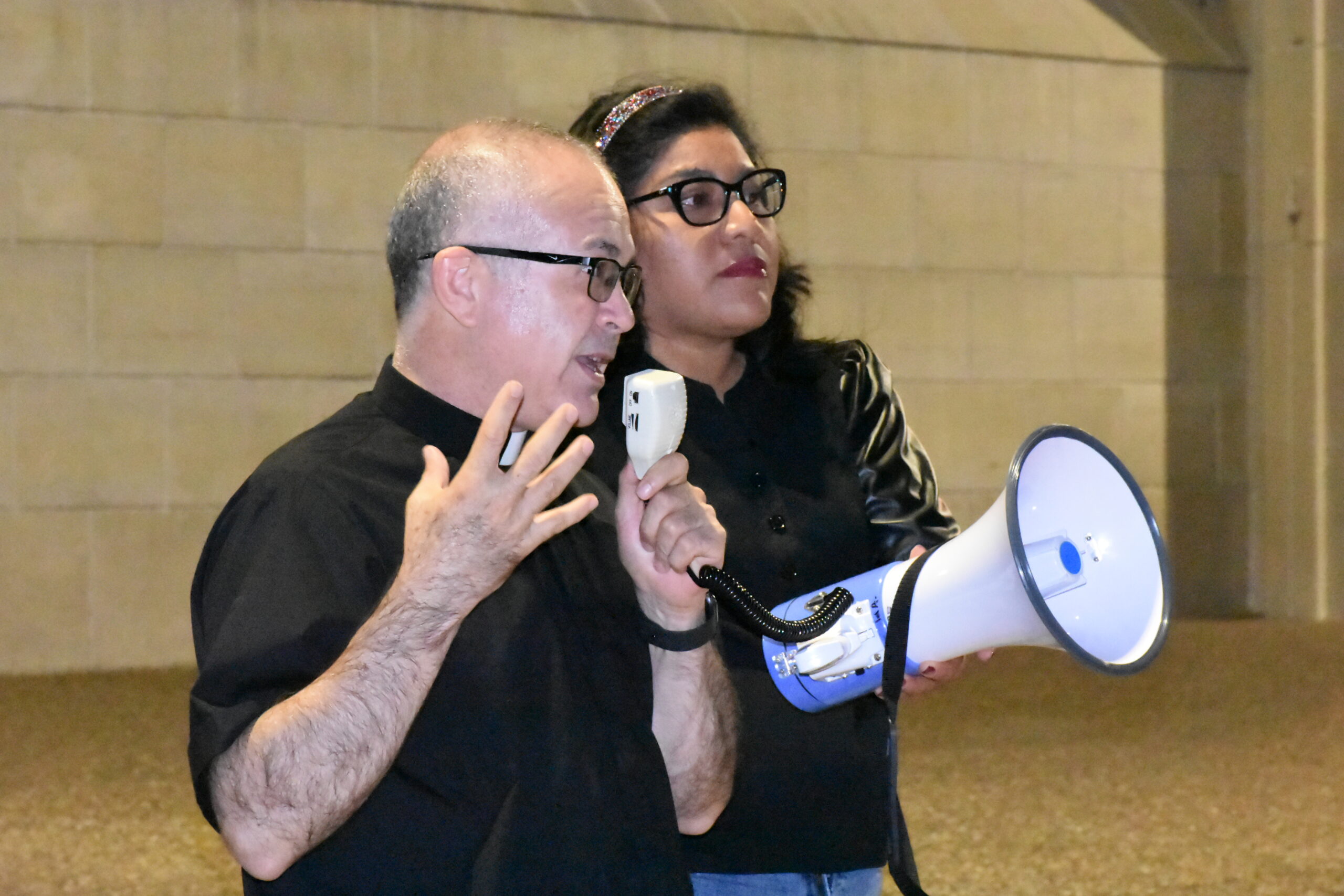
Father Jorge and LUPE Executive Director Tania Chavez Camacho speaking out against family separations at the San Juan Basilica
3. Fear is changing daily routines, from errands to commutes.
People are adjusting where they go, when they go, and who they travel with because of the risk of an encounter. Through personal accounts, social media posts, and local news reports, we have heard and observed how fear shows up in ordinary actions: going to work, getting gas, dropping kids off, going to the doctor, or making a quick trip to the store. The result is a constant state of stress that families carry into every decision. This is not normal, and it should not be accepted as the new routine for Valley life.
4. Scale of detentions is comparable to national trends, with hundreds of neighbors “disappeared” from our community, at times with fatal violence
Although these cases have received less national attention, the RGV has witnessed massive ICE activity. For example, the raids across warehouses in McAllen where hundreds of people were reportedly detained, including some U.S. Citizens who were eventually released. Charges were eventually dropped for dozens of those detained. Another example is a raid on a construction site where 25 people were reportedly detained. Similarly, in December, border patrol agents killed a man after shooting him three times in Starr County.
Local media reports share how neighbors have “disappeared,” and familiar faces at local businesses are suddenly gone. These stories point to a cultural and social loss that is hard to measure but easy to feel.
5. Construction and housing sectors are destabilized by worksite raids and fear
Builders and business leaders describe raids as slowing projects and reducing the workforce across the industry. That slowdown spreads to suppliers, lenders, and trades, which can mean fewer homes built and higher costs for families. Local reports captured how fear keeps workers from showing up and delays projects on the ground. When construction stalls, the harm is not limited to one job site. It ripples through housing, small business stability, and the regional economy.
6. Local banking and commerce feel the damage when building slows.
In an article on myrgv.com, a local banking leader emphasized how much local lending is tied to real estate, meaning the region is especially vulnerable when construction slows down due to ICE raids. Other local business leaders also described broad impacts, from commissions dropping to projects being postponed and a tightening of the labor market. When lending tightens and development slows, local businesses beyond construction feel it, too. This is one way aggressive enforcement affects families who may not work in construction but still live in the same economy.
7. Farming and food-related work are being disrupted by labor instability.
In a story by KRGV, a Valley farmer shared how he is struggling to find workers amid the widespread ICE raids. “One hundred percent, one hundred percent don’t want to come out of fear of being picked up even if they are doing it the right way,” farmer Nick Billman said to KRGV.
When workers are afraid to show up or when communities are under stress, farms and related businesses cannot operate normally. That creates pressure on small operations and can affect supply chains and costs. The Valley’s food and agriculture sector depends on stability, and raids introduce the opposite: uncertainty and disruption.
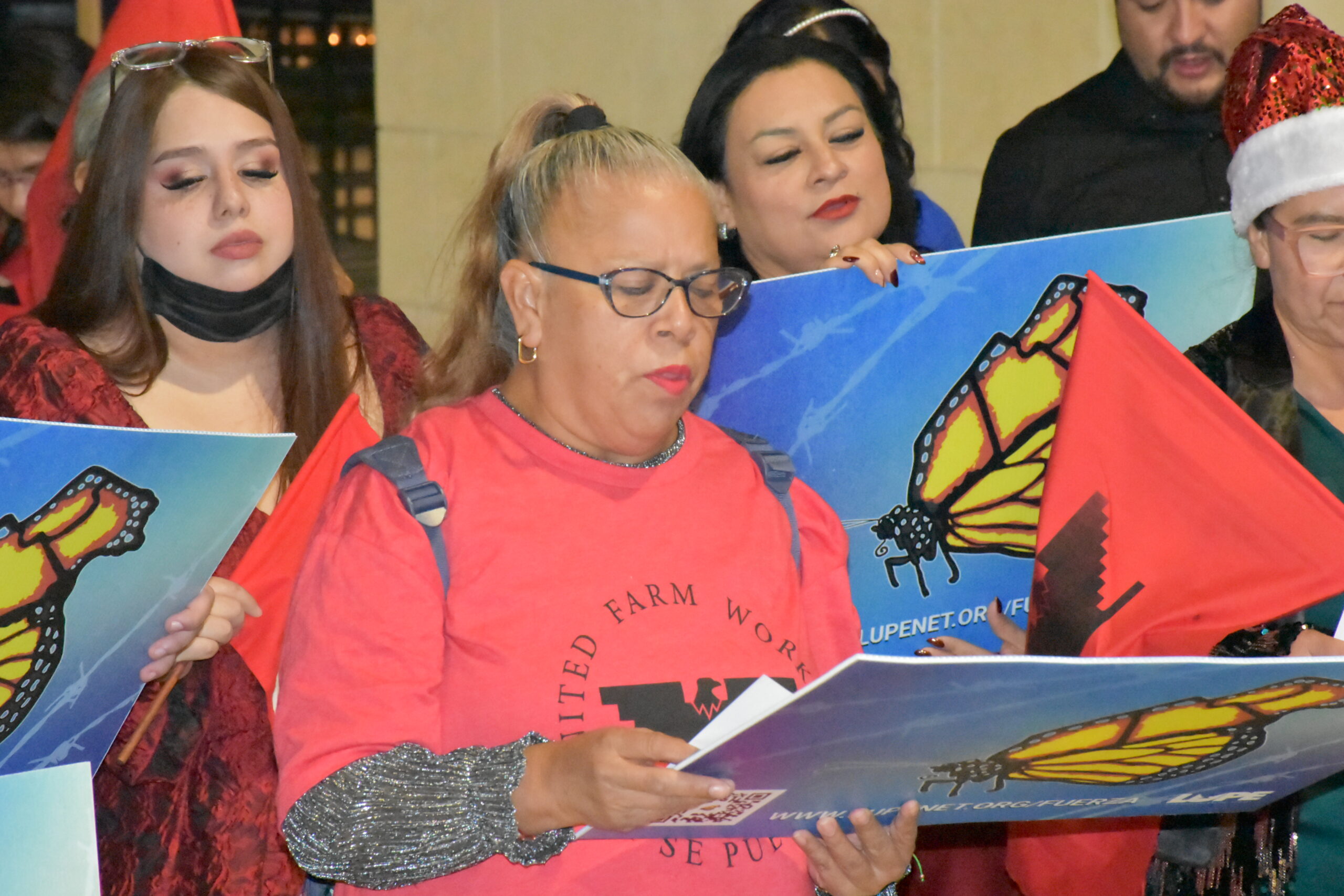
LUPE community leaders and staff chanting and calling for an end to ICE raids and family separations
8. Public education is disrupted as elementary schools close and college students are being priced out or having their visas challenged
Since the reversal of the Texas Dream Act of 2001 last summer, we have seen how schools and higher education institutions are being hit by anti-immigration efforts. Up until last year, undocumented high school graduates were eligible for financial assistance and qualified for in-state tuition prices at public colleges and universities. At South Texas College, for example, published tuition/fees show a sharp cost difference for a full-time course load: $1,968 in-district versus $3,048 at the non-resident rate. For families already facing fear at work and unstable income, that kind of jump can shut the door on college.
STC is the largest public community college in the Rio Grande Valley region of South Texas. A large portion of undocumented graduates enrolling in post-secondary education typically choose STC because of affordability and location. A growing institution with more and more majors, programs, and certifications would appeal to our growing valley. The local college has seen a drop in enrollment. According to the data shared on STC’s website, in the fall of 2024, there were approximately 16,081 students enrolled for classes. In the fall of 2025, the target enrollment was 16,401. The data shows only 16,134 students enrolled last fall, about 300 students less than anticipated.
In UTRGV, a group of 9 students reportedly had their visas suddenly revoked. Four of those students went on to sue DHS.
Additionally, school districts are facing deep challenges as enrollment numbers drop, leaving many districts forced to close schools across the region.
This is how enforcement and policy combine to limit opportunities for our community.
9. Local elected officials acknowledge the harm, but LUPE believes they must do more.
Local officials and public leaders have publicly recognized that raids are creating fear and disruption in the region, including impacts on daily life and the local economy. In an article by KRGV, Hidalgo County Judge Richard Cortez is quoted as saying, “[w]e're down 21 to 22% on airport boarding, bridge crossings, sales tax revenues.”
At the same time, statements from local officials have stopped short of any actions to protect local immigrant families. We reject the idea that leaders can shrug and say it is only a federal issue. We believe elected officials should be doing more to protect immigrant families, to inform the community about what is happening, and to use every available local tool to help keep families together. This moment requires clear public leadership, not quiet concern or press statements without policy action.
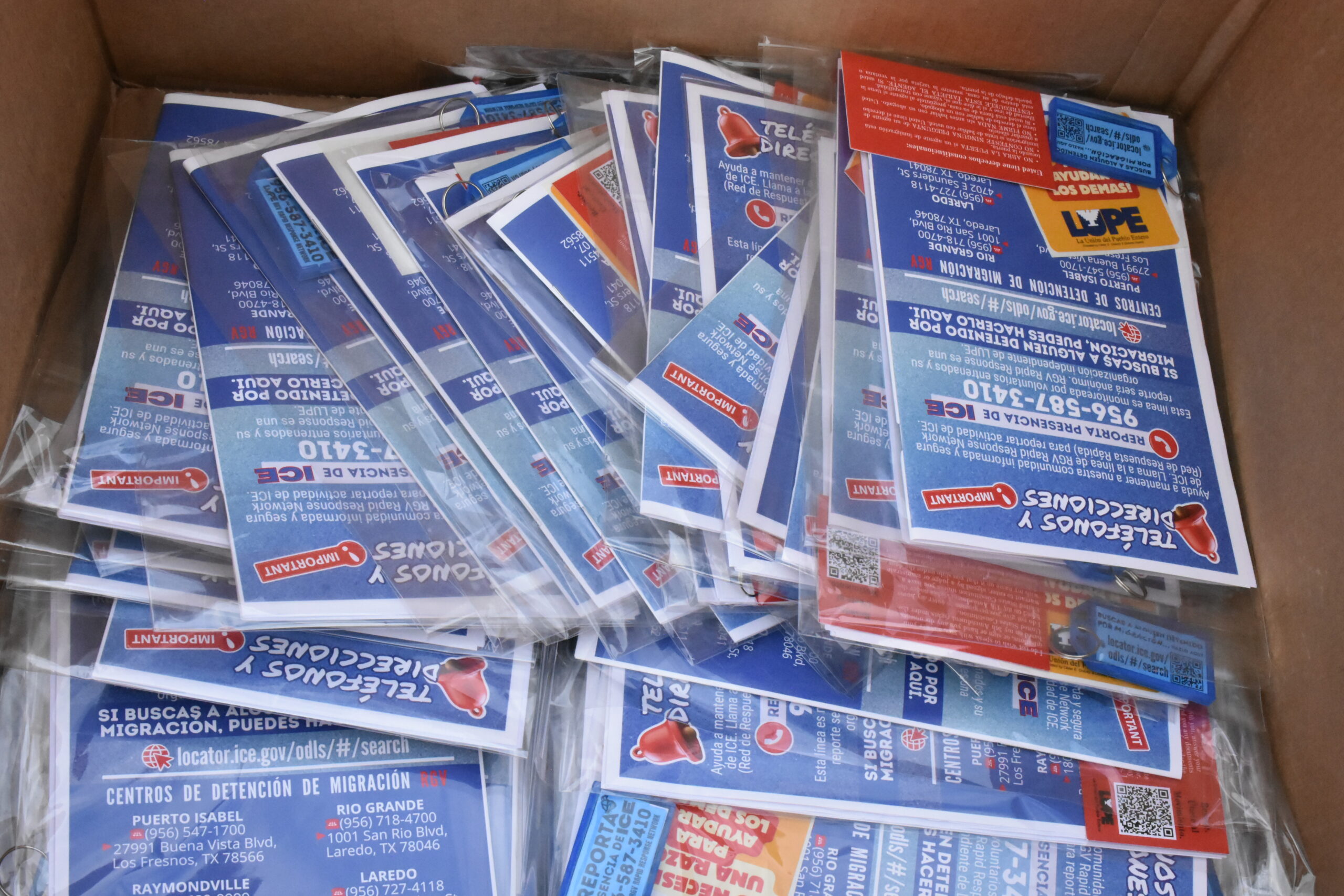
A box of know-your-rights kits ready for distribution
10. The Valley is responding by building community power and mutual protection
LUPE’s Valle Fuerte, Valle Libre campaign was created by and for our community to confront family separation in the RGV. In December, LUPE installed more than 20 signs at verified raid or arrest locations and distributed 500 Know Your Rights kits across colonias, businesses, and worksites, supported by volunteers across the region.
If you are interested in joining LUPE’s campaign, visit our campaign page and add your name to receive updates and dates for our upcoming kit distribution orientations. Or you can donate at lupenet.org/fundkits to help us buy the materials for the kits. Every dollar equals one kit.
The truth is that we know we can’t end these vicious attacks from one day to the next. But as our history teaches us, the border will resist and protect itself from those wanting to hurt and separate. The policies that criminalize our communities are not welcome and will not be tolerated.
We keep us together. We keep us safe. We keep us strong. We keep us free.
Credits: Written by Daniela Granados and Dani Marrero Hi; edited by Tania Chavez Camacho and Amber Arriaga Salinas; special thank you to RGV Rapid Response Network for being a primary source of verified ICE raid locations; special thank you to LUPE's immigration committee members, staff, and community members who contributed to this report and made Valle Fuerte, Valle Libre a reality